R
Robot.Edu.VN

The Làng Maker Journey

From a visiting child to a Thợ Cả (master maker) who comes back to coach. The robot is only the vehicle; what grows is the child.

A craft village for technology

A pottery village keeps its glaze recipes; a weaving village keeps its dyes. Làng Maker (the Maker Village) is a craft village too, except its secrets are open source. The Già Làng (elders) keep the customs, the Thợ Cả (masters) work alongside, and the apprentices watch, then do it themselves.

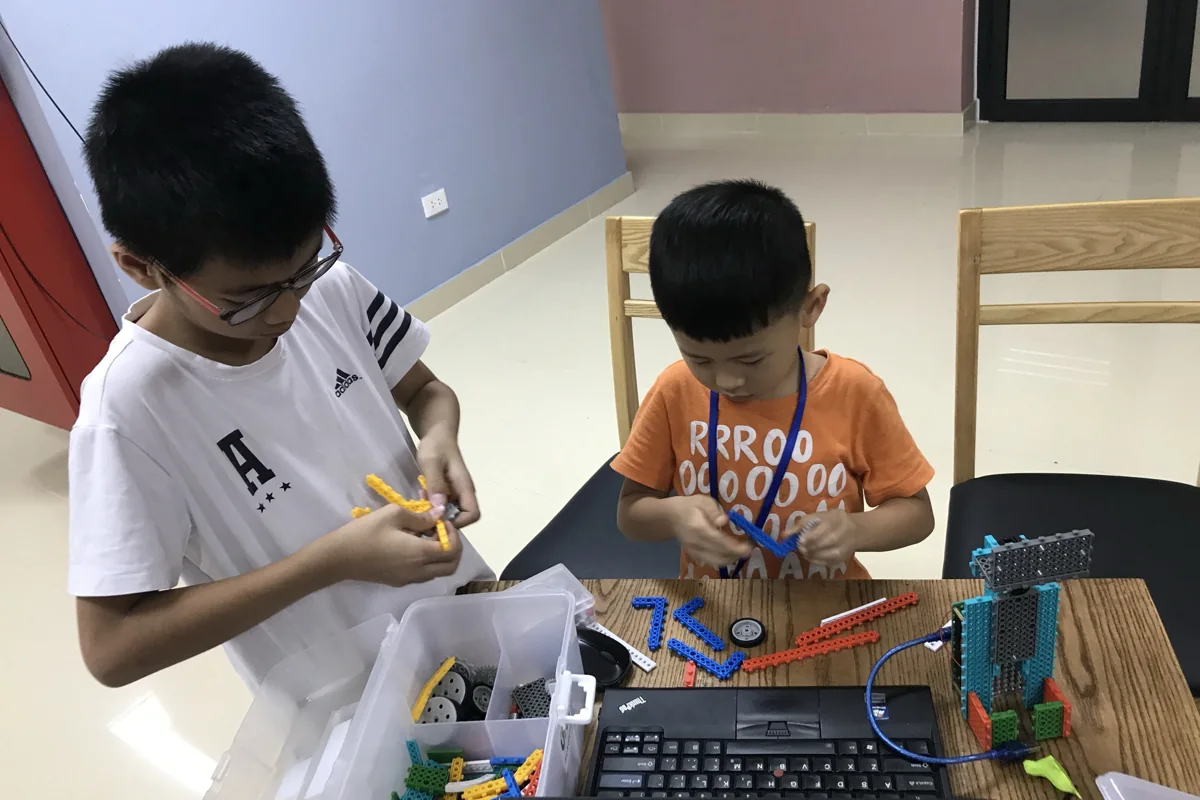
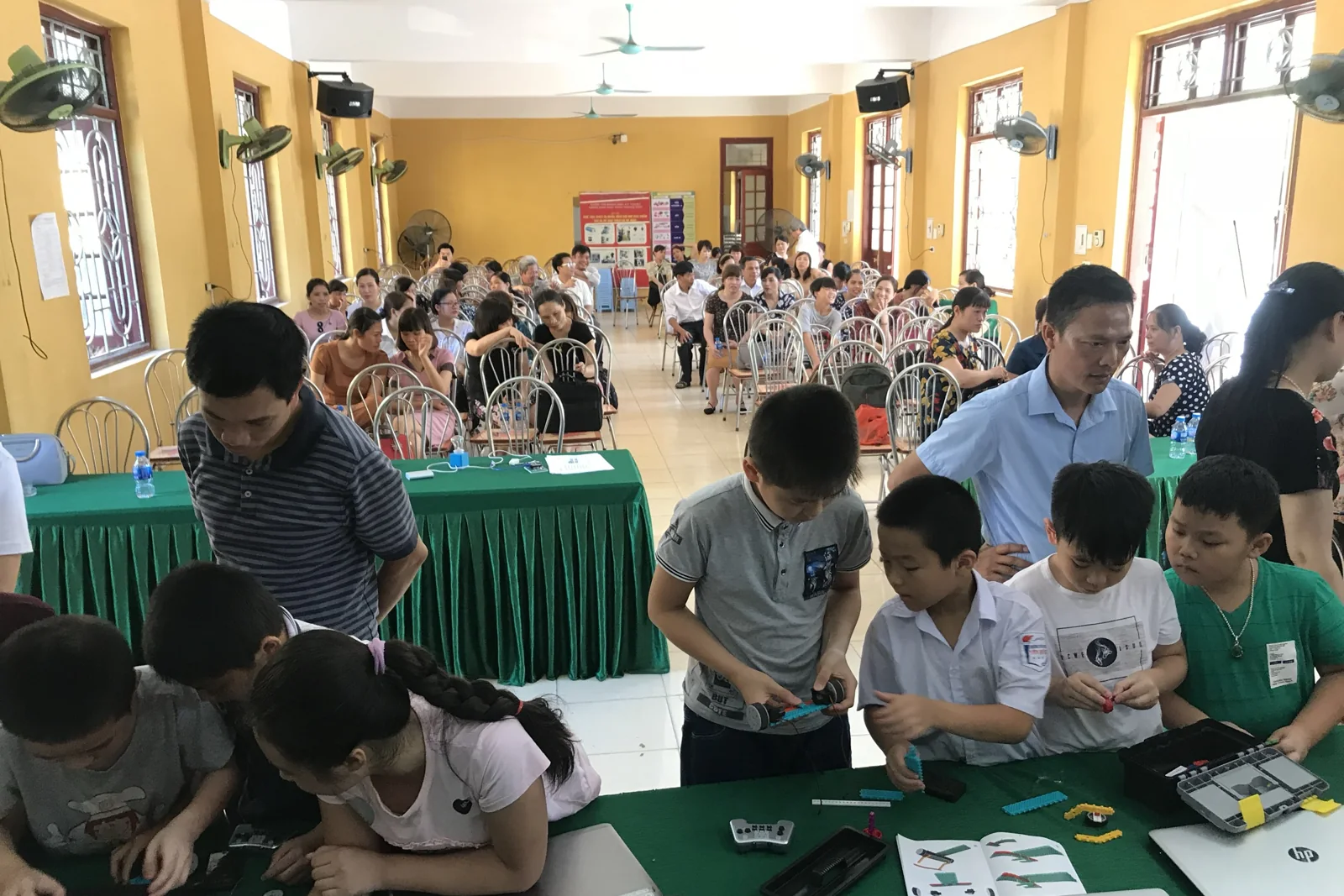
There are no lectures here. A child walks into the workshop, picks up a robot and starts. Knowledge is not poured in; the child builds it while making, testing, breaking and fixing.

A craft village for technology

The 7 + 1 cycle

Each cycle is eight sessions. Seven are workshop sessions: play and make. The eighth is Chợ Phiên (market day): the child demonstrates the product to parents and friends. That is why parents are invited to session 8, and it is the Share beat of the loop.

Eight stages, four seasons of the bamboo

Nobody has to climb all the way. Each stage is a real place in the village, with work to do and a milestone to recognise.

Sowing

Ages 6–8

How your child grows: Dares to touch, dares to try, is not afraid of mistakes.

Tools: NEO One computer with GCompris in Vietnamese · Camera and voice games on NEO · Lesson 1 on the simulator, no robot needed

Sowing, Ages 6–8

Stage 1

Khách Làng (village guest)

Who
Every child on their first visit, from age 4
What they do
Free coding hour, driving a robot through a maze, playing camera games with the whole body
What they gain
Not afraid of machines. Knows a robot is something you can control
Milestone
Robot driving licence
  • Electronics: Press a button, see a light, hear a buzzer
  • Robotics: Drive a robot through a maze
  • AI: Say “forward” and the robot moves
Stage 2

Thợ học việc (apprentice)

Who
Ages 6–10, has picked one thing to make
What they do
Build a BlockBot dump truck or crane; program in blocks on ThingBlock and the simulator
What they gain
Breaks it and fixes it alone. Can read a block program
Milestone
Level 1 PLAY
  • Electronics: Plug motors and servos into the right ports
  • Robotics: A two-wheel car that runs the child's own program
  • AI: Teach the machine to recognise hand gestures in a camera game

Branching

Ages 8–11

How your child grows: Fixes their own bugs and keeps going until the robot runs.

Tools: ThingBot with ThingBlock block programming · micro:bit with MakeCode · Tinkercad: drawing the 3D part you need

Branching, Ages 8–11

Stage 3

Village competitor

Who
Ages 9–14, loves to compete
What they do
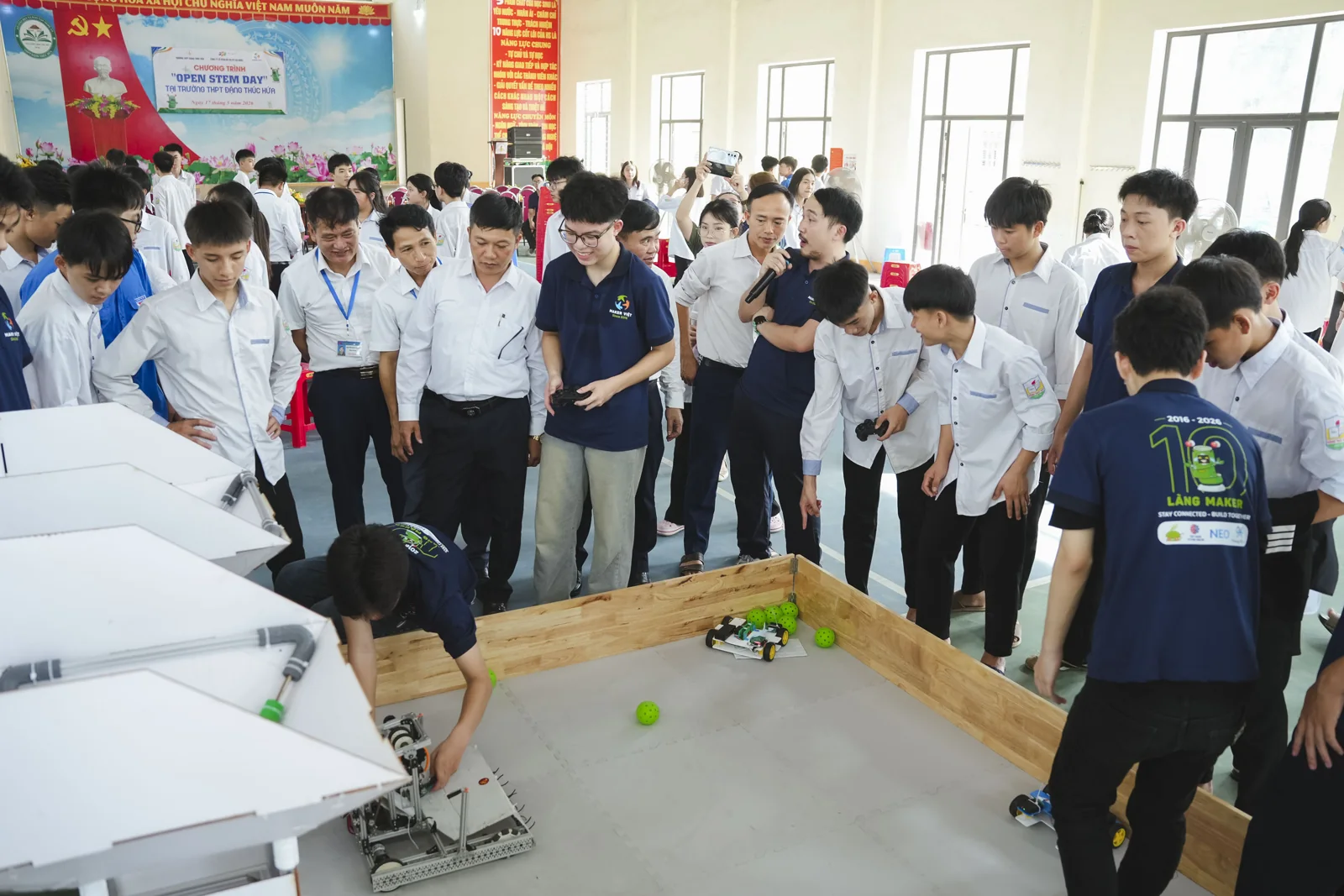
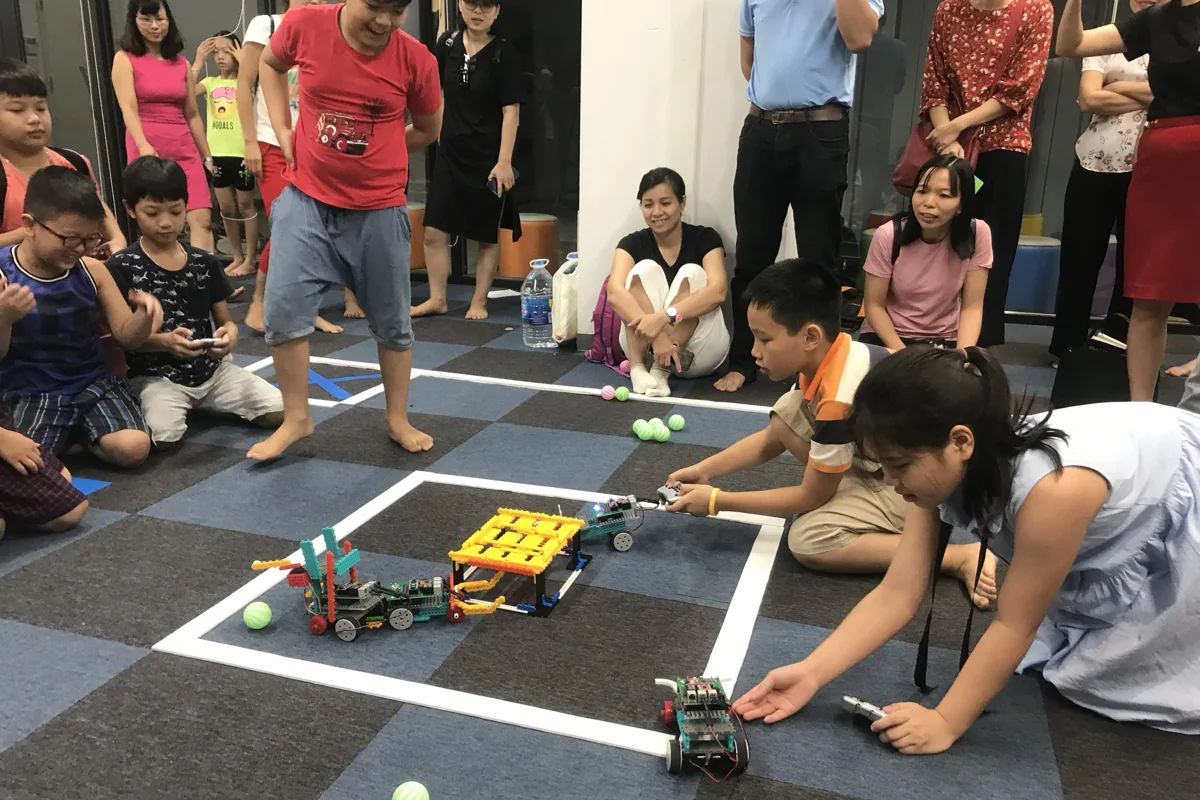
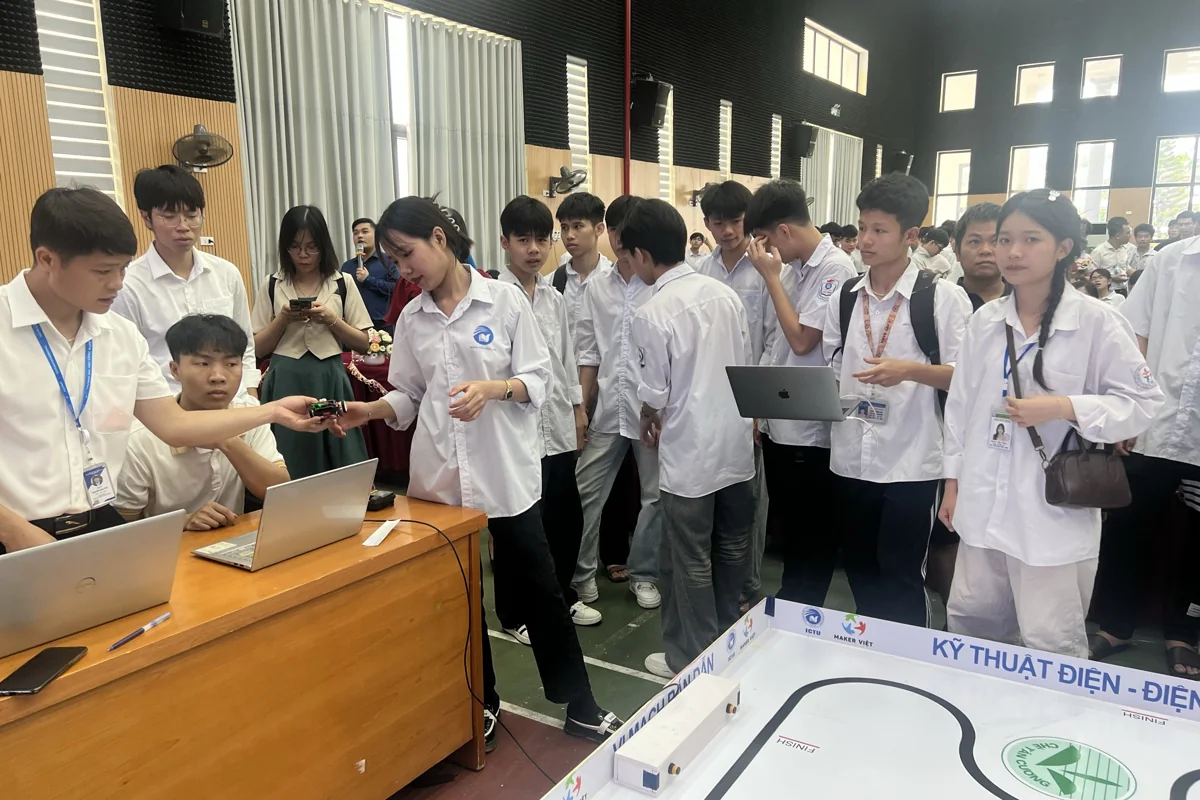
Weekly Robot Sport; preparing for FanRoc with a PS2 controller
What they gain
Fixes wires and swaps batteries under pressure. Loses, fixes, wins
Milestone
First competition team
  • Electronics: Ultrasonic sensor, batteries, wiring
  • Robotics: A controller-driven competition robot
  • AI: Try tactics on the simulated field

Stage 4

Dế STEM ambassador

Who
Ages 10–14, wants to make something of their own
What they do
DIY workshop, 3D printing, teaching assistant for new guests
What they gain
Has a project with their name on it. Can explain it to a younger child
Milestone
Level 2 MAKE
  • Electronics: Design a sensor circuit for the project
  • Robotics: 3D print and assemble a mechanism they drew
  • AI: Use an AI agent to build a game: the child describes the rules, the machine writes code, the child tests and fixes. The child stays the designer

Bearing fruit

Ages 11–14

How your child grows: Builds real projects, works in a team, enters a first competition.

Tools: ThingBot with sensors and a PS2 controller · Tinkercad Circuits, App Inventor for a robot-control app · FanRoc and BlueSilk-style projects

Bearing fruit, Ages 11–14

Stage 5

Maker-builder

Who
Ages 14–18
What they do
Sketch, simulate, fabricate, program, test. Provincial workshops, BlueSilk-style projects
What they gain
Goes the full loop from idea to a working product
Milestone
Level 3 KNOW & SHARE
  • Electronics: The electrical system of a self-driving car
  • Robotics: VIA self-driving car: a camera that sees the lane
  • AI: Build a voice assistant that drives the robot

Stage 6

Team Vietnam

Who
Outstanding competitors and ambassadors
What they do
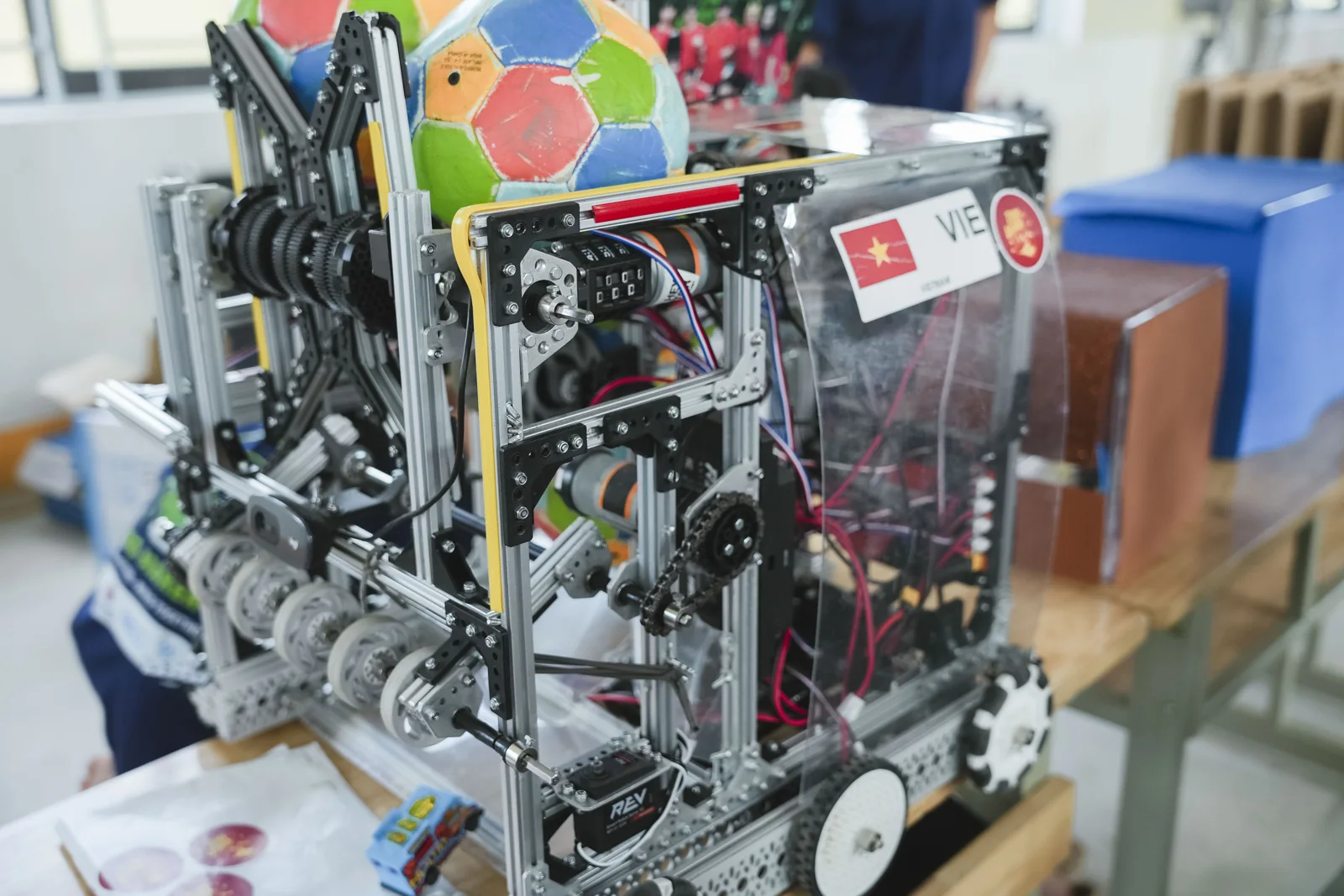
FIRST Global Challenge, FTC Vietnam
What they gain
Competes hard, respects opponents. Represents a nation
Milestone
The flag on the shirt
  • Electronics: An international competition robot
  • Robotics: Three-team alliance tactics
  • AI: Match data analysis

Returning to the roots

Ages 14–18

How your child grows: Leads, teaches the younger ones, carries the flag abroad.

Tools: VIA board and the K12 Maker kit, Arduino C · The VIA e-book on self-driving cars and AI · FTC, FIRST Global, NASA Space Apps

Returning to the roots, Ages 14–18

Stage 7

Thợ Cả (master maker)

Who
University students, former ambassadors and team members
What they do
Coach competition teams, serve as Tech-Tutor, lead sessions
What they gain
Can mentor others. Works alongside instead of lecturing
Milestone
Leads a full 7 + 1 cycle
  • Electronics: Create new kits: ThingBot, VIA
  • Robotics: Coach competition teams
  • AI: Contribute open source to the village's AI tools

Stage 8

Già Làng (elder)

Who
Those who completed the loop and stayed
What they do
Keep the philosophy, set direction, certify craft
What they gain
The village gains one more keeper of its customs
Milestone
A Thợ Cả they mentored who once was a Khách Làng
  • Electronics: Choose the tools for the next generation
  • Robotics: Open a new village
  • AI: Decide how far AI is used in the village

The 4 : 1 promise

Whoever learns at the village passes it on to four people. Not a duty, but how the village grows: today's Khách Làng is tomorrow's Thợ Cả.

Why we learn this way

The village learns the way Seymour Papert (MIT) described in Mindstorms: children learn deepest when they make something they care about, and a robot is an “object to think with”. The five principles below are not theory; they are five scenes you see every week at the village.

  1. 1

    Workshop first, classroom later

    A six-year-old holds a NEO One and drives a ThingBot in the very first session. Nobody lectures first. Questions come after the hands have touched.

  2. 2

    Hard fun

    If the robot veers, the child adjusts the two wheel speeds. If the BlueSilk silkworm chamber runs hot, the child changes the relay threshold. Hard, but the kind of hard they want to beat.

  3. 3

    Low floor, high ceiling, wide walls

    One ThingBot: at 6 you press buttons, at 10 you program in blocks, at 15 you write Arduino. The same robot competes, raises silkworms and watches the house.

  4. 4

    Never do it for them

    The mentor asks “what have you tried?” instead of taking the screwdriver. Parents sit a little further away. Using AI to build a game is fine, but the child is the designer and the one who checks when the machine is wrong.

  5. 5

    Learn by teaching

    Session 8 is Chợ Phiên: the child tells parents and friends how it works. The FIRST Global team comes back to the village to teach the younger ones.

This way of working draws on MIT's FabLab, the Arduino community and the FIRST competitions. Read more on the three pillars of our philosophy →

True stories

Two pieces of evidence from the village itself, so parents can see how far this path goes.

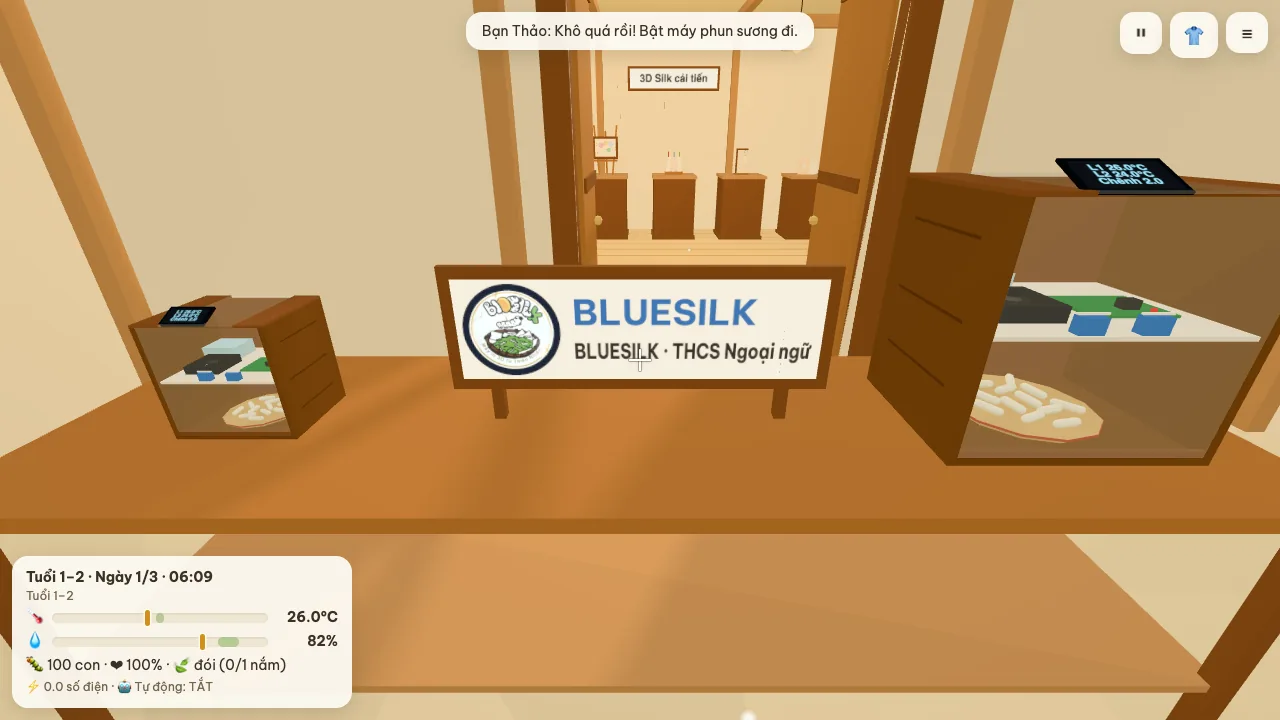
BlueSilk: a silkworm chamber built by the children

Starting from a real problem in a silk village, the children built a rearing chamber with temperature and humidity sensors, a relay for the fan and a servo for the door. They wired the circuit, chose the thresholds, and when the worms got sick they read the data to fix it.

The product also has a web game and a 3D version so that anyone without the hardware can play. That is the Share beat: what is made at the village goes out for others to use.

BlueSilk: a silkworm chamber built by the children

Source: Làng Maker's BlueSilk project, public web build at bluesilk-vr.vercel.app (29 Sep 2026)

Team Vietnam FIRST Global: from the village to the world stage

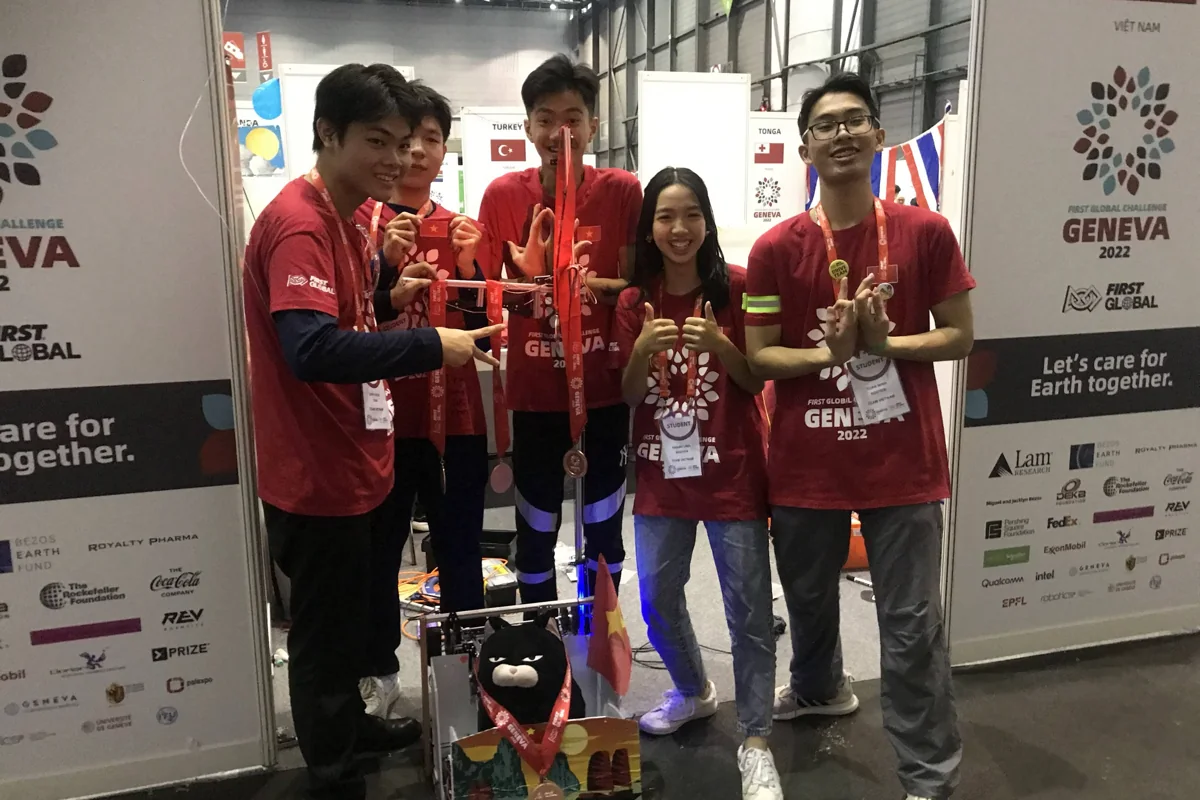
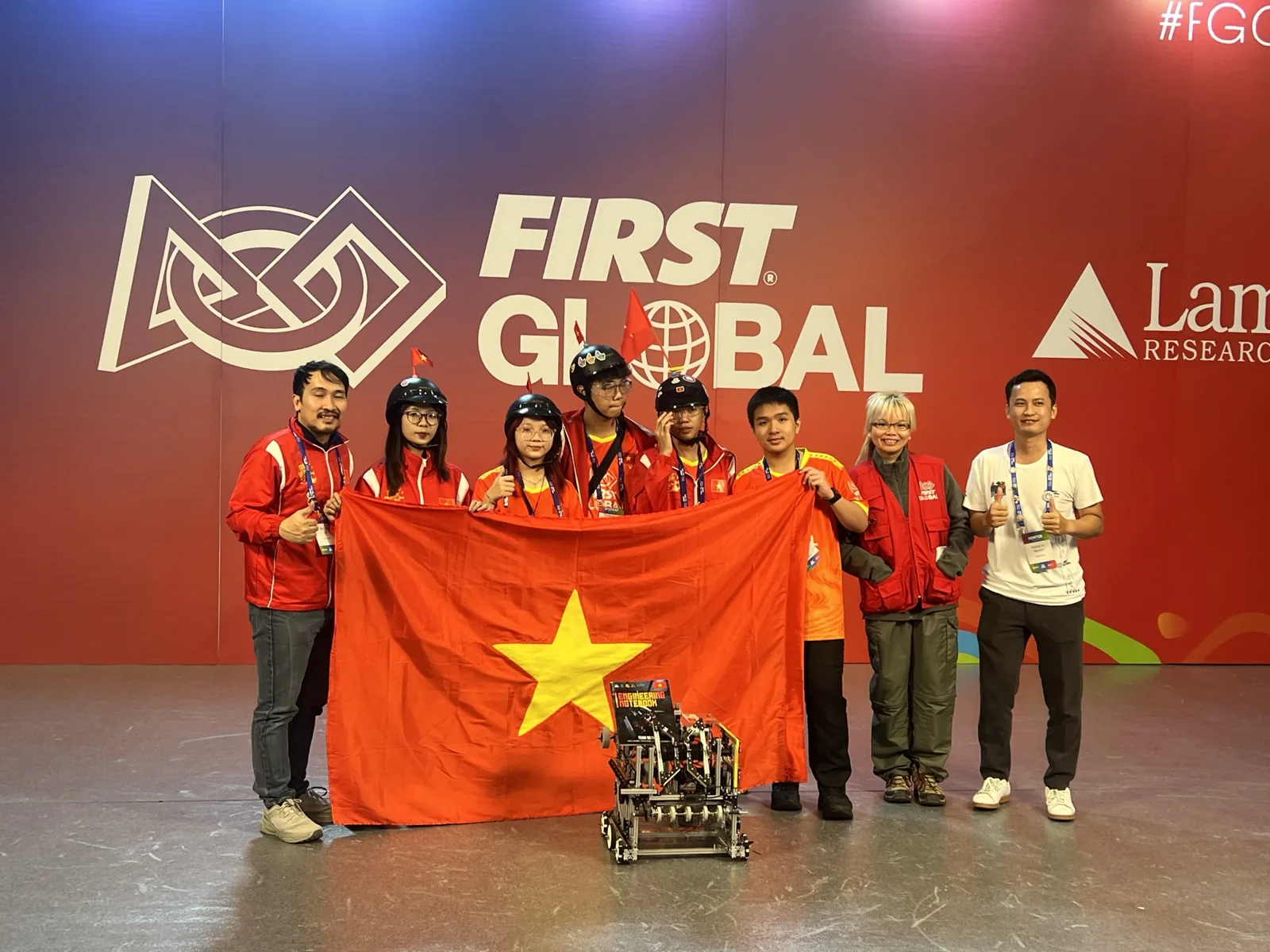
Vietnam's team at the FIRST Global Challenge 2025 in Panama came home with the Silver Medal of the Jackie Bezos Award, a Top 12 overall finish, the Storytelling Award and the Social Media Award. The year before, the team competed in Athens.

What the village is prouder of than the medals: the students put “professional and kind” first, and on returning they went to Hope School to teach younger children. That is the Returning-to-the-roots stage.

Team Vietnam FIRST Global: from the village to the world stage

Source: Team Vietnam - FIRST Global fan page, FGC 2025 wrap-up post of 3 Nov 2025; albums FGC 2024 Athens and Team Vietnam × Hope School

A launch pad, seen from the senior years

  • The Maker Logbook records every project and every stage: a real portfolio, not grades.
  • International results are real, but they are one of many doors out.
  • The skills that stay: systems thinking, breaking big work into small steps, debugging, teamwork, explaining to others, and using AI as a tool.
  • The return: those who go furthest are the ones who come back to lead the next team.